
TradFi Perpetuals
Stock Market ပိတ်ချိန် Perpetual Price Gap Risk
စတော့ဈေးကွက်ပိတ်ချိန်မှာ perpetual ဈေးက ဘာကြောင့် ဆက်ရွေ့နေလဲ၊ ဈေးခုန်မှု၊ stop အလုပ်လုပ်ပုံနဲ့ အတင်းပိတ်ခံရမှုကို ဘယ်လိုကြိုတွက်ထားမလဲ။
Traditional stock exchange ပိတ်နေချိန် stock-linked perpetual contract က ဆက်လက်ရောင်းဝယ်နိုင်ခြင်းသည် အဆင်ပြေသလိုမြင်ရသော်လည်း reference market ပိတ်ထားသောအချိန်၏ liquidity၊ basis နှင့် price-discovery risk ကို နားလည်ရသည်။ Weekend၊ holiday၊ overnight news သို့မဟုတ် trading halt ကြောင့် reopen ချိန်တွင် price gap ဖြစ်ပြီး leveraged position ကို ပြင်းထန်စွာထိခိုက်နိုင်သည်။
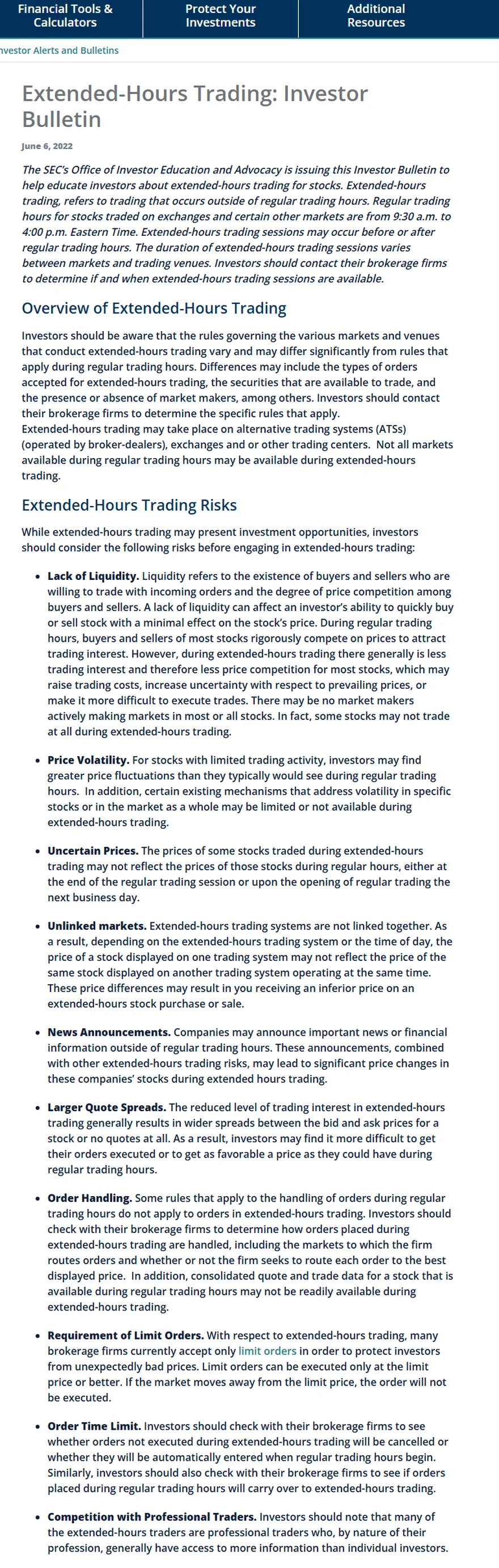
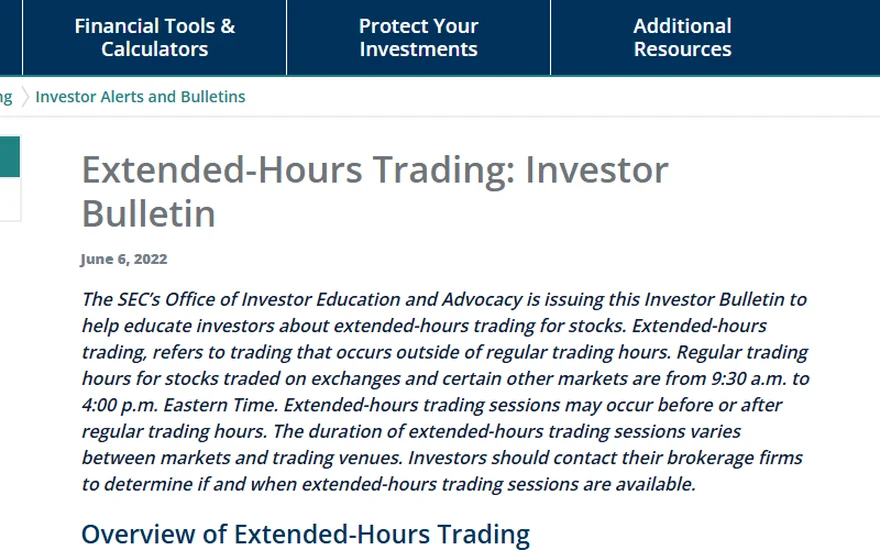
U.S. SEC Investor.gov ၏ real extended-hours risk webpage screenshot။ Screenshot: 2026-08-27. ဤအချက်များသည် underlying stock market ၏ extended-hours risk ကိုရှင်းပြခြင်းဖြစ်ပြီး Binance perpetual pricing/liquidation rule ကိုအစားမထိုးပါ။ Official source
Underlying market ပိတ်သွားရင် ဘာတွေပြောင်းသလဲ
Regular trading session ပြီးနောက် underlying share ၏ main-exchange liquidity လျော့သွားသည် သို့မဟုတ် ရပ်သွားသည်။ သို့သော် earnings guidance၊ regulatory action၊ acquisition၊ macro data နှင့် geopolitical news မရပ်ပါ။
Perpetual traders က ထိုသတင်းကို အခြေခံပြီး contract price ကိုရွှေ့နိုင်သော်လည်း fresh cash-market quote မရှိသဖြင့်—
- Fair value အပေါ် သဘောထားကွာခြားမှုကြီးနိုင်သည်။
- Order book ပါးပြီး spread/slippage ကျယ်နိုင်သည်။
- Perpetual price နှင့် last underlying close ကြား basis တိုးနိုင်သည်။
- Collateral crypto price လည်းတစ်ပြိုင်နက်ရွေ့နိုင်သည်။
- Reopen price discovery တွင် ကြီးမားသောပြန်ညှိမှုဖြစ်နိုင်သည်။
24/7 contract chart ရှိနေခြင်းက 24/7 underlying liquidity ရှိသည်ဟု မဆိုလိုပါ။
Regular၊ extended နဲ့ closed market ကိုခွဲပါ
| အခြေအနေ | Underlying liquidity | Price reference | အဓိက risk |
|---|---|---|---|
| Regular session | ပုံမှန်အားဖြင့်အမြင့်ဆုံး | Live exchange quotes | Volatility၊ halt၊ event |
| Extended hours | ပုံမှန်ထက်နည်းနိုင် | Multiple venues/broker rules | Wider spread၊ partial fill |
| Weekend/holiday closed | Main exchange ပိတ် | Last close/contract methodology | Basis၊ gap၊ reference uncertainty |
| Trading halt | Specific security ကိုရပ် | Last valid quote/methodology | Reopen jump၊ no manual exit |
FINRA extended-hours disclosure က regular session အပြင်ဘက်တွင် lower liquidity၊ higher volatility၊ changing prices၊ unlinked markets နှင့် wider spreads ဖြစ်နိုင်ကြောင်း သတိပေးထားသည်။ Stock perpetual သည် traditional extended-hours share မဟုတ်သော်လည်း underlying reference အားနည်းသည့်အချိန် risk ကိုနားလည်ရန် ဤအချက်များက အသုံးဝင်သည်။
Cash-market gap၊ perpetual move နဲ့ repricing ကိုခွဲပါ
- Cash-market gap — underlying stock/ETF ၏ previous close မှ next open သို့ trade မရှိသော price interval ကိုကျော်ပြီးဖွင့်ခြင်း။
- Perpetual orderbook move — underlying market ပိတ်နေစဉ် perpetual contract က ဆက် trade ဖြစ်ကာ orderbook တွင် continuous fills ဖြင့်ရွေ့ခြင်း။ Contract chart မှာ blank gap မဖြစ်ဘဲကြီးမားစွာရွေ့နိုင်သည်။
- Basis/index/mark repricing — cash market reopen နီးချိန် သို့မဟုတ် reopen ပြီးနောက် contract၊ index/mark နှင့် underlying cash price တို့ပြန်ညှိရာတွင် basis ပြောင်းခြင်း။
“Gap risk” ဟုတစ်လုံးတည်းရေးထားသော်လည်း ဤလမ်းကြောင်းသုံးခု၏ timing မတူပါ။ Liquidation ကို underlying opening print တစ်ခုတည်းကဆုံးဖြတ်ခြင်းမဟုတ်ဘဲ live contract ၏ mark-price နှင့် risk-engine rule အတိုင်းဖြစ်သည်။
Price gap ဆိုတာဘာလဲ
ယခင် close နှင့် နောက် open ကြားတွင် စျေးနှုန်းအဆင့်များကို trade မဖြစ်ဘဲ ကျော်သွားခြင်းကို gap ဟုခေါ်သည်။ Gap direction ကို news sentiment၊ order imbalance နှင့် market maker liquidity တို့သတ်မှတ်နိုင်သည်။
Stop price သတ်မှတ်ထားသော်လည်း gap က stop ကိုကျော်သွားလျှင် exact stop price တွင် fill ရမည်ဟု မအာမခံပါ။ Stop-market က available liquidity ရှိရာတွင် fill ဖြစ်နိုင်ပြီး stop-limit က limit ပြင်ပသို့ကျော်သွားလျှင် မဖြည့်နိုင်ပါ။
Gap size ကိုကြိုသိနိုင်မည်မဟုတ်သဖြင့် risk planning တွင် percentage တစ်ခုတည်းမဟုတ်ဘဲ “small၊ large၊ extreme gap ဖြစ်လျှင် account ဘာဖြစ်မလဲ” ဟု scenario သုံးခုဖြင့်စစ်ရသည်။
Perpetual 24/7 ဖြစ်လို့ gap မရှိတော့ဘူးလား
မဟုတ်ပါ။ Contract chart က ဆက်လက် trade ဖြစ်နေသော်လည်း underlying market reopen တွင် cash-market order imbalance နှင့် price discovery ပြန်ဖြစ်သည်။ Perpetual price၊ index price၊ mark price နှင့် underlying open တို့တစ်ချိန်တည်းတူမည်ဟု မဆိုနိုင်ပါ။
Weekend အတွင်း perpetual က news ကိုကြိုထင်ဟပ်နိုင်သော်လည်း liquidity နည်းသော price က နောက်နေ့ official open ကိုအာမခံမပြောနိုင်ပါ။ Reopen တွင် contract/cash basis မြန်မြန်ပြောင်းခြင်းက long သို့မဟုတ် short နှစ်ဘက်လုံးကိုထိခိုက်နိုင်သည်။
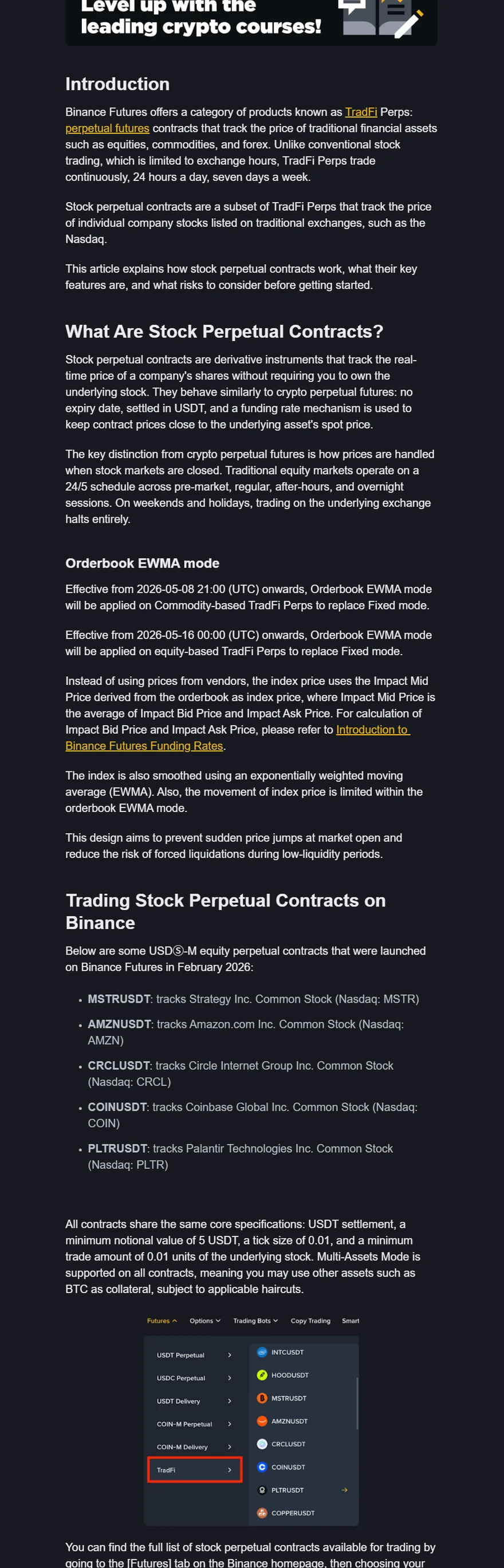
Binance Academy ၏ real Orderbook EWMA section screenshot။ Screenshot: 2026-08-27. Dated methodology description ဖြစ်သဖြင့် current contract page နှင့် trading parameters ကိုပါပြန်စစ်ပါ။ Official source
Orderbook EWMA mode ကိုနားလည်ပါ
Binance Academy stock perpetual guide အရ equity-based TradFi Perps တွင် 2026-05-16 မှစ၍ Orderbook EWMA mode ကိုအသုံးပြုထားသည်။ Guide က Impact Bid/Ask မှရသော Impact Mid Price နှင့် exponentially weighted moving average ကိုသုံးပြီး index movement ကိုချောမွေ့/ကန့်သတ်စေသည့် design ဟုရှင်းပြထားသည်။
ဤ mechanism ၏ရည်ရွယ်ချက်က low-liquidity period သို့မဟုတ် market open အနီး sudden price jump နှင့် forced liquidation risk ကိုလျှော့ရန်ဖြစ်သော်လည်း—
- Fair price ကိုအမြဲတိတိကျကျသိမည်ဟု မဆိုလိုပါ။
- Manipulation၊ low liquidity သို့မဟုတ် gap risk ပျောက်မည်မဟုတ်ပါ။
- Mark/index methodology ပြောင်းလဲနိုင်သည်။
- Last price နှင့် liquidation price တူမည်မဟုတ်ပါ။
Live contract specification၊ funding tab နှင့် methodology announcement ကိုစစ်ပါ။
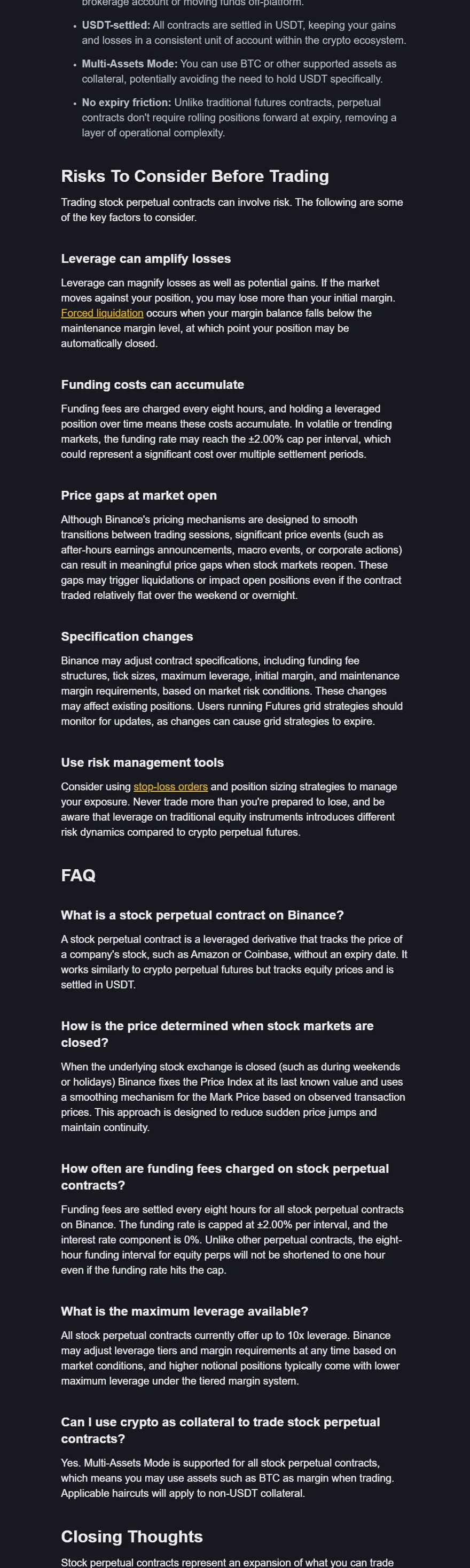
Binance Academy ၏ real risk-section screenshot။ Screenshot: 2026-08-27. Market-open gap က liquidation သို့မဟုတ် open position ကိုထိခိုက်နိုင်ကြောင်းဖော်ပြထားသော်လည်း actual outcome သည် live mark price၊ liquidity နှင့် account margin state ပေါ်မူတည်သည်။ Official source
Gap ဖြစ်စေတတ်သော event အမျိုးအစားများ
Earnings နဲ့ guidance
Revenue/earnings headline ထက် forward guidance၊ margin၊ customer demand သို့မဟုတ် management commentary ကြောင့် price gap ဖြစ်နိုင်သည်။ Result မထွက်မီ analyst consensus ကိုသိရုံဖြင့် surprise direction ကိုမအာမခံနိုင်ပါ။
Macro နဲ့ geopolitical news
Interest-rate decision၊ inflation data၊ sanctions၊ conflict သို့မဟုတ် trade restriction က market-wide gap ဖြစ်စေနိုင်သည်။ Country/sector ETF perpetual တွင် currency နှင့် regional risk ထပ်ပါနိုင်သည်။
Merger၊ delisting နဲ့ regulatory action
Acquisition price၊ antitrust decision၊ accounting investigation သို့မဟုတ် delisting notice က company-specific jump ဖြစ်စေနိုင်သည်။ Underlying trading halt ဖြစ်လျှင် reference uncertainty ပိုမြင့်နိုင်သည်။
Stock split နဲ့ corporate action
Split ကို economic value-neutral ဖြစ်ရန်ရည်ရွယ်သော်လည်း contract quantity၊ tick size၊ order နှင့် chart adjustment လိုနိုင်သည်။ Reverse split သို့မဟုတ် special dividend အချိန် open orders ကို exchange announcement အတိုင်းပြန်စစ်ရသည်။
Stop-loss တစ်ခုတည်းက လုံလောက်သလား
Stop order သည် risk tool ဖြစ်သော်လည်း guarantee မဟုတ်ပါ။ Gap၊ thin order book သို့မဟုတ် halt ကြောင့် worse fill/no fill ဖြစ်နိုင်သည်။ Liquidation engine က mark price နှင့် maintenance margin ကိုအသုံးပြုသောကြောင့် manual stop မတိုင်မီ position ပိတ်နိုင်သည်။
Stop distance ထက် position size ပိုအရေးကြီးနိုင်သည်။ Planned stop မရသောအခြေအနေတွင်တောင် account ကိုမပျက်စေမည့် notional နှင့် leverage ကိုရွေးရသည်။ Reduce-only status နှင့် trigger price type ကိုလည်းစစ်ပါ။
Cross margin နဲ့ collateral feedback loop
Cross margin တွင် position တစ်ခု၏ loss က shared wallet equity ကိုလျှော့ပြီး အခြား positions ၏ liquidation buffer ကိုပါလျှော့နိုင်သည်။ Multi-Assets collateral တွင် BTC သို့မဟုတ် crypto asset ကိုသုံးထားပါက weekend risk event အချိန် stock perpetual နှင့် collateral နှစ်ခုလုံးဆန့်ကျင်ဘက်ရွေ့နိုင်သည်။
Contract basis၊ funding cost နှင့် collateral haircut ကိုသီးခြားစစ်ပါ။ “Underlying stock က crypto မဟုတ်” ဟုဆိုပြီး collateral correlation ကိုမမေ့ပါနှင့်။
Filled stress example — stop နဲ့ liquidation ကိုမရောပါနှင့်
အောက်ပါကိန်းများသည် risk method သင်ကြားရန် assumptions ဖြစ်ပြီး live price၊ fill guarantee သို့မဟုတ် universal liquidation formula မဟုတ်ပါ။ Fee/funding ကိုအောက်ပါ directional-loss ကိန်းများတွင်မထည့်ရသေးပါ။
- Long quantity: 10 units
- Entry: 100 USDT
- Planned stop: 98 USDT
- Planned price loss: 10 × (100 − 98) = 20 USDT
Scenario A — liquidation မတိုင်မီ stop က နိမ့်သောစျေးဖြင့် fill ဖြစ်ခြင်း
Live calculator မှ liquidation estimate 85 USDT ဟုပြပြီး cash market reopen/contract repricing ကြောင့် stop-market က 98 မဟုတ်ဘဲ 90 ဝန်းကျင်တွင် fill ဖြစ်သည်ဟုယူဆပါ။ Actual directional loss သည် 10 × (100 − 90) = 100 USDT ဖြစ်ပြီး planned 20 USDT ထက် 80 USDT ပိုများသည်။ Stop trigger က fill price ကိုအာမခံခြင်းမဟုတ်ပါ။
Scenario B — risk engine က stop မျှော်မှန်းချက်ထက်အရင်ဝင်ခြင်း
တူညီသော position တွင် live liquidation estimate 92 USDT ဟုယူဆပါ။ Mark price က liquidity မလုံလောက်သည့်အချိန် 92 ကိုမြန်မြန်ကျော်လျှင် risk engine က stop ကို 90 တွင် manually ထွက်နိုင်မည်ဟူသောမျှော်မှန်းချက်မတိုင်မီ forced action လုပ်နိုင်သည်။ Liquidation fee၊ bankruptcy-price execution နှင့် remaining margin outcome ကို platform statement ဖြင့်သာသိနိုင်ပြီး “90 တွင်ထွက်မည်” ဟုမတွက်ပါနှင့်။
Liquidation estimate 85/92 နှစ်ခုလုံးကို ဤဆောင်းပါးကတွက်ထုတ်ထားခြင်းမဟုတ်ပါ။ Symbol၊ side၊ quantity၊ entry၊ margin mode၊ leverage tier၊ maintenance margin၊ collateral နှင့် other positions ကို live calculator ထဲထည့်ပြီးရသောကိန်းကိုသာ scenario sheet သို့ကူးပါ။ Small/large/extreme path တစ်ခုစီတွင် mark-price path၊ expected fill၊ funding intervals၊ fees နှင့် final equity ကိုသီးခြားရေးပါ။
Reopen မတိုင်မီ scenario sheet
| Scenario | Contract/basis | Liquidity | ကိုယ်စစ်ရမည့်အချက် |
|---|---|---|---|
| News မရှိ၊ quiet reopen | Basis ကျဉ်းနိုင် | ပြန်ကောင်းနိုင် | Funding/fee ဆက်ကိုင်သင့်မသင့် |
| Moderate surprise | Gap နှင့် spread တိုးနိုင် | Partial fill ဖြစ်နိုင် | Stop/limit behavior၊ buffer |
| Major adverse event | Large gap၊ halt ဖြစ်နိုင် | Exit ခက်နိုင် | Account-level maximum loss |
| Collateral shock ပါတွဲ | Margin equity ထပ်ကျနိုင် | Forced deleverage risk | Cross exposure၊ haircut |
Percentage ကိုကြိုသတ်မှတ်ထားသော prediction မဟုတ်ဘဲ ကိုယ့် contract/current volatility ဖြင့် input ထည့်ပါ။ Scenario တစ်ခုချင်းတွင် estimated mark price၊ liquidation buffer၊ funding intervals နှင့် account equity ကိုတွက်ပါ။
စနေ၊ တနင်္ဂနွေနှင့် ညအိပ်ပိုင်းအတွက် စစ်ဆေးရန်စာရင်း
- Underlying exchange ဘယ်အချိန်ပြန်ဖွင့်မလဲ၊ timezone ဘာလဲ။
- Holiday သို့မဟုတ် early-close schedule ရှိသလား။
- Earnings၊ merger၊ split သို့မဟုတ် regulatory event ရှိသလား။
- Current index/mark methodology ဘာလဲ။
- Position notional နှင့် effective leverage ဘယ်လောက်လဲ။
- Liquidation price မှ mark price အကွာအဝေးဘယ်လောက်လဲ။
- Isolated/cross နှင့် collateral asset ဘာလဲ။
- Funding interval ဘယ်နှကြိမ်ဖြတ်မလဲ။
- Stop/limit trigger rule နှင့် reduce-only မှန်သလား။
- Large gap/no-fill scenario တွင် account maximum loss ဘယ်လောက်လဲ။
- Platform maintenance သို့မဟုတ် login failure ဖြစ်လျှင် plan ရှိသလား။
- Event risk မယူဘဲ position လျှော့/ပိတ်နိုင်သလား။
Risk ကိုလျှော့ရန် leverage လျှော့ခြင်း၊ position size လျှော့ခြင်း၊ isolated margin သုံးခြင်း၊ event မတိုင်မီပိတ်ခြင်း သို့မဟုတ် trade မလုပ်ခြင်းတို့က stop တစ်ခုတည်းထက် ပိုထိရောက်နိုင်သည်။ “24/7 trade လို့ရ” ဆိုသည်ကို convenience အဖြစ်သာယူပြီး underlying market structure ကို မမေ့ပါနှင့်။ ဤအကြောင်းအရာသည် ပညာပေးရန်သာဖြစ်ပြီး weekend trade အကြံပြုချက် မဟုတ်ပါ။