
စတော့နှင့် ETF အခြေခံ
ETF ဆိုတာဘာလဲ — စတော့တစ်ခုဝယ်ခြင်းနဲ့ ဘာကွာသလဲ
ETF နဲ့ စတော့တစ်ခုဝယ်ခြင်း ဘာကွာလဲဆိုတာကို NAV၊ ဈေးကွက်ဈေးနဲ့ NAV ကွာဟချက်၊ အညွှန်းကိန်းနောက်လိုက်ရာမှာ ကွာသွားမှုနဲ့ စီမံခန့်ခွဲခအချိုးတို့နဲ့ ရှင်းပြထားပါတယ်။
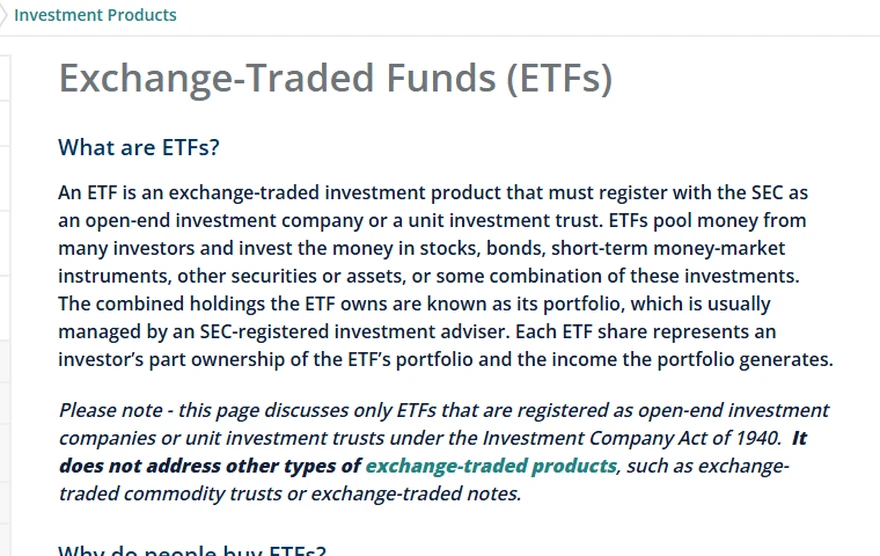
ETF သည် exchange-traded fund ၏ အတိုကောက်ဖြစ်သည်။ Fund တစ်ခုက စတော့၊ bond၊ commodity သို့မဟုတ် အခြားပိုင်ဆိုင်မှုများကို အစုလိုက်ကိုင်ထားပြီး ရင်းနှီးမြှုပ်နှံသူက fund share ကို စတော့တစ်ခုကဲ့သို့ exchange ပေါ်တွင် ဝယ်ရောင်းနိုင်သည်။ သို့သော် “ETF တစ်ခုဝယ်ရုံနဲ့ အန္တရာယ်ပျောက်သွားမယ်” ဆိုသည့်အယူအဆတော့ မမှန်ပါ။ ETF တစ်ခုချင်းစီ၏ index၊ holdings၊ cost နှင့် structure ကို သီးခြားစစ်ရသည်။
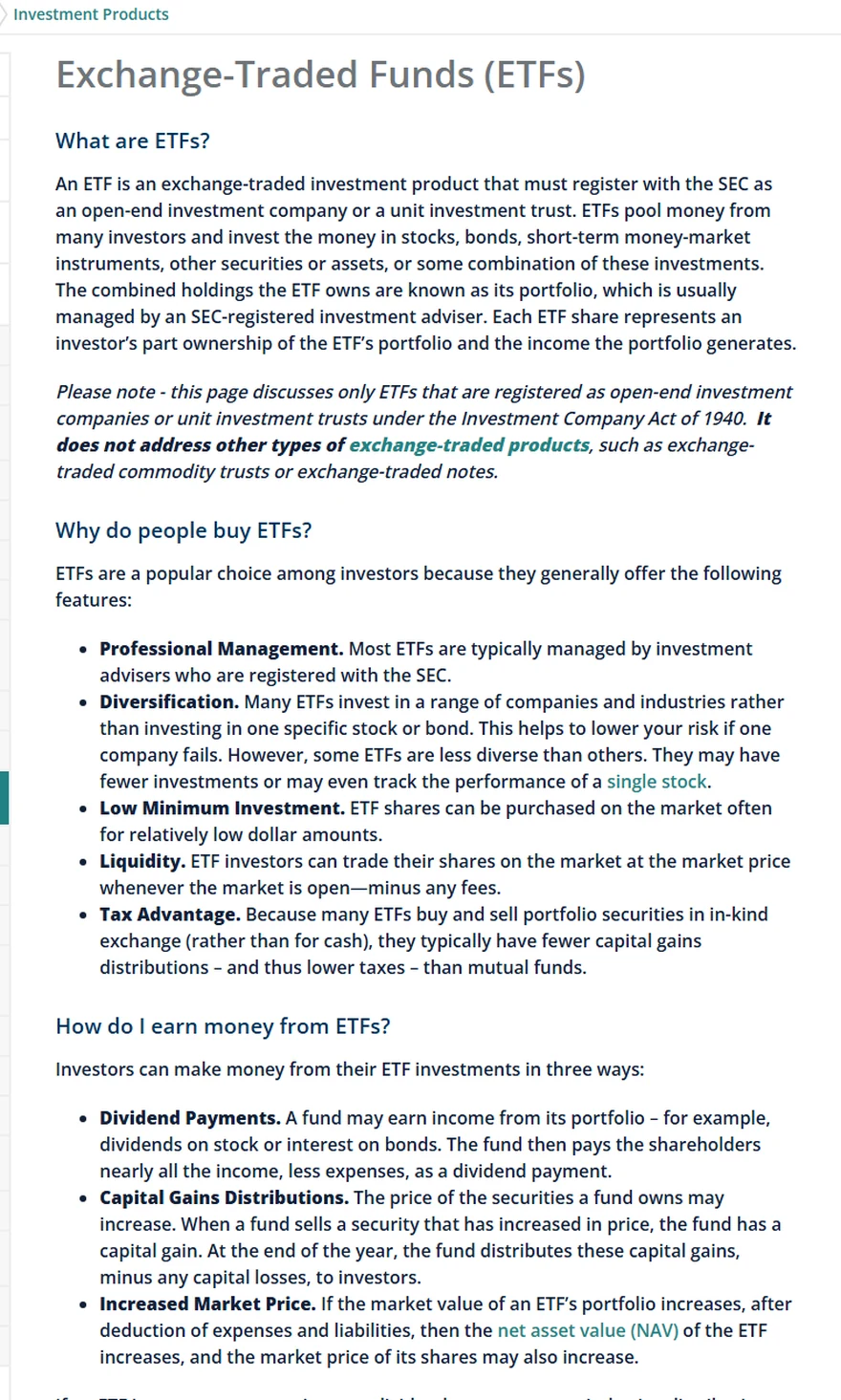
Investor.gov ၏ real webpage screenshot။ Screenshot: 2026-08-27. ဤစာမျက်နှာက 1940 Act အောက် register လုပ်ထားသော open-end investment company/UIT ETF များကိုရှင်းပြခြင်းဖြစ်ပြီး commodity trust သို့မဟုတ် ETN အားလုံးကိုမလွှမ်းခြုံပါ။ Official source
စတော့တစ်ခုနှင့် ETF တစ်ခု၏ အဓိကကွာခြားချက်
စတော့တစ်ခုသည် ကုမ္ပဏီတစ်ခု၏ စီးပွားရေးရလဒ်ကို တိုက်ရိုက်လိုက်သည်။ Product ပြဿနာ၊ management အပြောင်းအလဲ သို့မဟုတ် အကြွေးပြဿနာကြောင့် စျေးနှုန်းပြင်းထန်စွာကျနိုင်သည်။ ETF တစ်ခုသည် အများအားဖြင့် asset အများအပြားကို စုပေါင်းထားသောကြောင့် ကုမ္ပဏီတစ်ခုတည်း၏အန္တရာယ်ကို လျှော့ချနိုင်သည်။ သို့သော် ETF တစ်ခုက sector တစ်ခုတည်း သို့မဟုတ် ကုမ္ပဏီအနည်းငယ်တွင် အလွန်စုထားလျှင် concentration risk မပျောက်ပါ။
| စစ်ဆေးချက် | စတော့တစ်ခု | ETF တစ်ခု |
|---|---|---|
| Exposure | ကုမ္ပဏီတစ်ခု | Asset အစုတစ်ခု သို့မဟုတ် strategy တစ်ခု |
| အဓိကအန္တရာယ် | Company-specific risk | Market၊ sector၊ index နှင့် fund-structure risk |
| အချက်အလက် | Company filing၊ earnings | Factsheet၊ prospectus၊ holdings၊ index rules |
| နှစ်စဉ်ကုန်ကျစရိတ် | Fund expense မရှိ | Expense ratio ရှိနိုင် |
| Trading cost | Spread/commission | Spread/commission အပြင် fund expense ပါနိုင် |
Broad-market ETF က ကုမ္ပဏီရာပေါင်းများစွာ ပါနိုင်သော်လည်း thematic ETF တစ်ခုက AI၊ clean energy သို့မဟုတ် biotech စသော ကဏ္ဍတစ်ခုတည်းကို အာရုံစိုက်နိုင်သည်။ ETF ဟူသောအမည်တစ်ခုတည်းဖြင့် diversified ဖြစ်မဖြစ် မဆုံးဖြတ်ပါနှင့်။
ETF အမျိုးအစားတွေကို ဘယ်လိုခွဲမလဲ
- Broad-market index ETF — စျေးကွက်အကျယ်ကို ခြေရာခံပြီး ကုမ္ပဏီတစ်ခုတည်းအပေါ် မှီခိုမှုကို လျှော့ပေးနိုင်သည်။
- Sector သို့မဟုတ် thematic ETF — Technology၊ energy သို့မဟုတ် trend တစ်ခုကို အာရုံစိုက်သဖြင့် holdings များသော်လည်း concentration မြင့်နိုင်သည်။
- Bond ETF — Bond အစုကို ကိုင်ထားသော်လည်း interest-rate၊ credit နှင့် duration risk ရှိသည်။
- Commodity ETF/ETP — Commodity အစစ်၊ futures သို့မဟုတ် အခြား structure ကို သုံးနိုင်သဖြင့် product document ကို သီးခြားဖတ်ရသည်။
- Actively managed ETF — Index ကိုရိုးရှင်းစွာမလိုက်ဘဲ manager ၏ strategy အတိုင်း holdings ပြောင်းသည်။
- Leveraged သို့မဟုတ် inverse ETF — အများအားဖြင့် နေ့စဉ် return ရည်မှန်းချက်ကို leverage ဖြင့်လိုက်သည်။ Daily reset နှင့် compounding ကြောင့် ရက်ရှည် return သည် underlying index ၏ 2x/3x တိတိ မဖြစ်နိုင်ပါ။
နာမည်နီးစပ်သည့် ETF နှစ်ခုတောင် holdings၊ weighting rule၊ currency၊ domicile နှင့် expense မတူနိုင်သည်။ Ticker ကိုသာမကြည့်ဘဲ issuer page နှင့် prospectus ကိုတိုက်စစ်ပါ။
ETF စျေးနှုန်း ဘယ်လိုရွေ့လျားသလဲ
ETF တွင် market price နှင့် underlying portfolio ၏ net asset value (NAV) နှစ်မျိုးရှိသည်။ Investor.gov ၏ ETF ရှင်းလင်းချက် အရ retail investor များသည် exchange ပေါ်ရှိ market price ဖြင့်ဝယ်ရောင်းကြပြီး ထိုစျေးသည် NAV ထက် premium သို့မဟုတ် discount ဖြစ်နိုင်သည်။ Authorized participants များ၏ creation/redemption နှင့် arbitrage လုပ်ငန်းစဉ်က price ကို NAV နီးစပ်အောင် ကူညီနိုင်သော်လည်း တိတိကျကျတူမည်ဟု အာမခံမထားပါ။
Underlying market ပိတ်နေချိန်၊ breaking news အချိန် သို့မဟုတ် liquidity နည်းသော fund တွင် premium/discount နှင့် bid-ask spread ကျယ်နိုင်သည်။ “နောက်ဆုံးစျေး” တစ်ခုတည်းကြည့်ခြင်းထက် current bid၊ ask၊ NAV နှင့် historical premium/discount ကိုတွဲကြည့်ပါ။
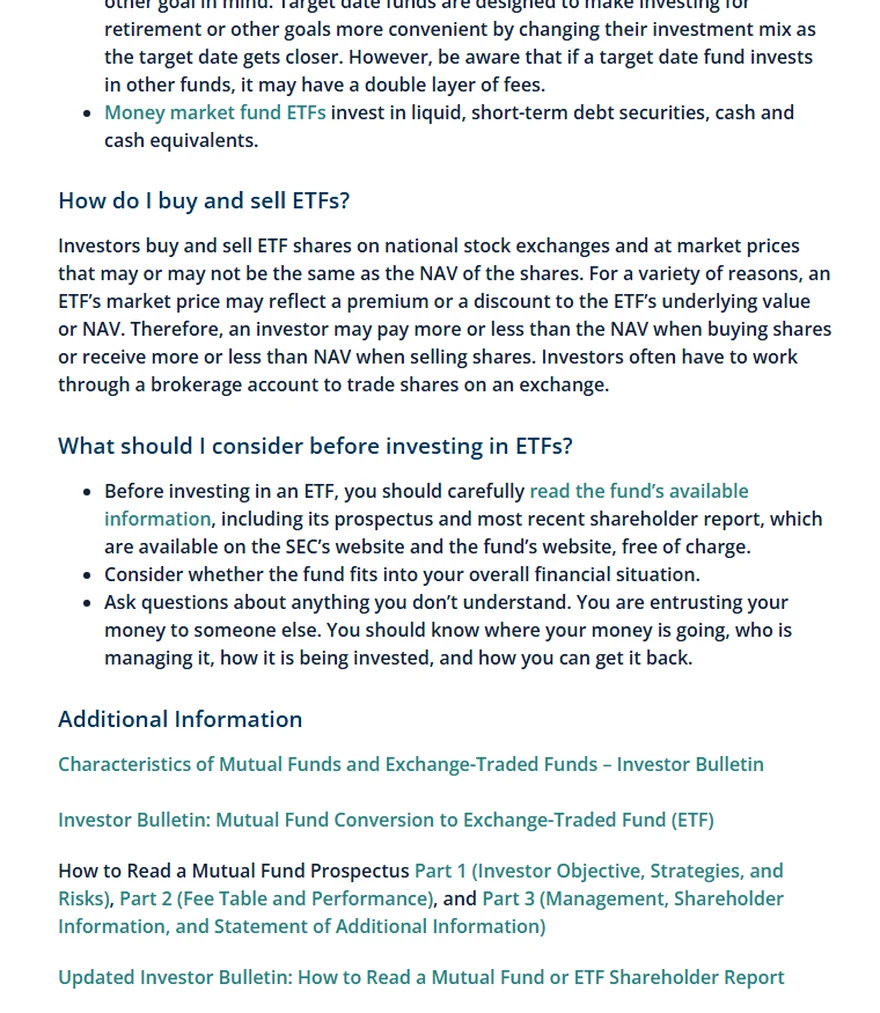
Investor.gov ၏ real webpage screenshot။ Screenshot: 2026-08-27. Official NAV ကို as-of date/time နှင့်ဖတ်ရပြီး intraday quote သို့မဟုတ် indicative value နှင့်မရောပါနှင့်။ Official source
NAV၊ market price နဲ့ premium/discount ကိုပြီးစီးတွက်ပါ
NAV per share = (fund assets − liabilities) ÷ shares outstanding ဖြစ်သည်။ ဥပမာ assets 1,000 million USD၊ liabilities 10 million၊ shares outstanding 9.9 million ဟုယူဆပါက NAV/share = (1,000 − 10) ÷ 9.9 = 100 USD ဖြစ်သည်။ Currency/unit တူကြောင်းနှင့် NAV timestamp တူကြောင်းအရင်စစ်ပါ။
Official NAV ကို fund က ပုံမှန်အားဖြင့် trading day အဆုံးတွင် as-of timestamp ဖြင့်တွက်သည်။ Intraday indicative value သို့မဟုတ် broker estimate က official closing NAV မဟုတ်နိုင်ပါ။ Retail investor သည် ပုံမှန်အားဖြင့် secondary market တွင် bid/ask ဖြင့်ဝယ်ရောင်းသည်။ Authorized participant ၏ creation/redemption ကို “retail holder က NAV ဖြင့်အချိန်မရွေး redeem လုပ်နိုင်သည်” ဟုမဖတ်ပါနှင့်။
Premium/discount % = (market price − NAV) ÷ NAV × 100% ဖြစ်သည်။ အောက်ပါကိန်းများသည် တစ်နှစ်စာ process သင်ကြားရန် assumptions ဖြစ်ပြီး live ETF data မဟုတ်ပါ—
| Step | Calculation |
|---|---|
| Starting NAV / buy ask | 100.00 / 100.20 USD |
| 10 shares purchase cost | 10 × 100.20 = 1,002.00 USD |
| Buy premium | (100.20 − 100.00) ÷ 100.00 × 100% = 0.20% |
| Benchmark return / ETF NAV return | 5.00% / 4.70% |
| Ending NAV / sell bid | 104.70 / 104.49 USD |
| Sell discount | (104.49 − 104.70) ÷ 104.70 × 100% ≈ −0.20% |
| Sale proceeds | 10 × 104.49 = 1,044.90 USD |
| Investor PnL / return | 1,044.90 − 1,002.00 = 42.90 USD; 42.90 ÷ 1,002.00 × 100% ≈ 4.28% |
Tracking difference ကို တူညီသောကာလအတွက် ETF NAV return − benchmark return ဟုရေးနိုင်သည်။ ဤဥပမာတွင် 4.70% − 5.00% = −0.30 percentage point ဖြစ်သည်။ Tracking error က period များစွာ၏ tracking differences ဘယ်လောက်ပြောင်းလဲသလဲကို တိုင်းတာသည့် volatility metric ဖြစ်ပြီး single-period −0.30 point တစ်ခုတည်းဖြင့်မတွက်နိုင်ပါ။ Issuer က NAV return 4.70% ကို report လုပ်ပြီးသားဆိုလျှင် fund expense သည် NAV ထဲတွင်ထင်ဟပ်နေတတ်သဖြင့် expense ratio ကို ထပ်မနုတ်ပါနှင့်။ ဤ 4.28% investor return တွင် example bid/ask impact ပါပြီး broker commission နှင့် tax မပါသေးပါ။
Expense ratio နဲ့ spread ကို နမူနာတွက်ကြည့်ခြင်း
ETF ထဲသို့ US$1,000 ထည့်ပြီး expense ratio 0.20% ဖြစ်သည်ဟု ယူဆပါက တစ်နှစ်လုံးတန်ဖိုးမပြောင်းဘဲ ကိုင်ထားသည်ဆိုသော ရိုးရှင်းသည့်နမူနာတွင် fund-level cost သည် ခန့်မှန်း US$2 ဖြစ်သည်။ ဤကုန်ကျစရိတ်ကို ပုံမှန်အားဖြင့် သီးခြား bill အဖြစ်မယူဘဲ fund asset မှဖြတ်သွားသောကြောင့် return တွင်ထင်ဟပ်သည်။ တကယ့်တန်ဖိုးပြောင်းလဲမှု၊ compounding နှင့် tax ကြောင့် ရလဒ်ကွာနိုင်သည်။
Bid US$99.90၊ ask US$100.10 ဖြစ်နေချိန် 10 shares ကို ask ဖြင့်ဝယ်ပြီး ချက်ချင်း bid ဖြင့်ရောင်းလျှင် US$2 ခန့်ကွာသည်။ Commission မရှိလည်း spread က real trading cost ဖြစ်နေဆဲဖြစ်သည်။ Order size ကြီးခြင်း သို့မဟုတ် liquidity နည်းခြင်းက slippage ထပ်ဖြစ်စေနိုင်သည်။
ETF နှစ်ခုနှိုင်းရန် တရားဝင်စာရွက်စာတမ်းများကို ဘယ်အစဉ်လိုက်ဖတ်ရမလဲ
တူညီသော ETF နှစ်ခုကိုနှိုင်းမည်ဆိုလျှင် အောက်ပါအစဉ်ကိုပြီးစီးပါ—
- Issuer product page — exact ticker၊ full fund name၊ share class၊ exchange၊ NAV/market-price as-of date ကိုမှတ်ပါ။
- Factsheet — objective၊ benchmark၊ top holdings၊ sector/country weight၊ expense ratio နှင့် effective/report date ကိုမှတ်ပါ။
- Prospectus — principal strategy၊ principal risks၊ fee table၊ derivatives၊ securities lending၊ tax/structure ကိုဖတ်ပါ။
- Holdings file — holdings date၊ cash/derivative position၊ top-10 concentration နှင့် overlap ကိုစစ်ပါ။
- Premium/discount history — market price/NAV date တူအောင်စစ်ပြီး outlier day များကိုမှတ်ပါ။
- Performance table — NAV return၊ market-price return နှင့် benchmark return ကို တူညီသော period/end date ဖြင့်နှိုင်းပါ။
- Annual/semiannual report — realized/unrealized results၊ expenses၊ portfolio changes နှင့် notes ကိုဖတ်ပါ။
Research sheet တွင် source URL၊ document/report date၊ NAV timestamp၊ currency၊ unit၊ ticker/share class နှင့် benchmark version ကိုတစ်တန်းတည်းမှတ်ပါ။ Date သို့မဟုတ် share class မတူလျှင် ကိန်းများကို တန်းတူမနှိုင်းပါနှင့်။
ETF မဝယ်ခင် စစ်ဆေးရမည့် 9 ချက်
- Investment objective — ဘာကိုလိုက်ရန် ရည်ရွယ်ထားသလဲ။
- Index သို့မဟုတ် strategy — Rules ကို ဘယ်သူသတ်မှတ်ပြီး ဘယ်နှစ်ကြိမ် rebalance လုပ်သလဲ။
- Holdings နှင့် weighting — အကြီးဆုံး 10 ခုက portfolio ဘယ်လောက်ယူထားသလဲ။
- Expense ratio — နှစ်စဉ် fund cost ဘယ်လောက်ရှိသလဲ။
- Liquidity — Trading volume နှင့် median bid-ask spread ဘယ်လောက်ရှိသလဲ။
- Tracking difference — Index return နှင့် fund return ကွာခြားမှု ရှိသလား။
- Premium/discount — Market price က NAV နှင့် သမိုင်းတလျှောက် ဘယ်လောက်ကွာခဲ့သလဲ။
- Currency နှင့် domicile — Underlying asset၊ settlement currency နှင့် fund မှတ်ပုံတင်ရာနိုင်ငံက ဘာလဲ။
- Structure — Physical holding လား၊ synthetic swap သုံးသလား၊ leveraged/inverse product လား။
Issuer factsheet က summary အတွက်ကောင်းသော်လည်း principal risks၊ fee detail နှင့် legal structure ကို prospectus ထဲတွင် ဆက်ဖတ်ရသည်။ Fund နာမည်က ရည်ရွယ်ချက်ကို အပြည့်အဝ မရှင်းပြနိုင်ပါ။
ETF share နှင့် ETF perpetual မတူပါ
Binance Futures တွင်တွေ့ရနိုင်သော QQQUSDT သို့မဟုတ် SPYUSDT ကဲ့သို့အမည်များသည် ETF share မဟုတ်ဘဲ ETF စျေးနှုန်းကို ခြေရာခံသည့် perpetual contracts ဖြစ်နိုင်သည်။ Binance Academy ၏ ETF contract လမ်းညွှန် က underlying ETF ကို မပိုင်ကြောင်း၊ USDT settlement၊ funding နှင့် leverage risk ရှိကြောင်း ရှင်းလင်းထားသည်။
ETF share ဝယ်သည့်ရည်ရွယ်ချက်က အချိန်ရှည် diversification ဖြစ်နိုင်သော်လည်း ETF perpetual က derivative exposure ဖြစ်သည်။ Product screen တွင် Stock/Spot သို့မဟုတ် Futures, leverage multiplier, funding rate နှင့် contract specification ကို မဖြစ်မနေစစ်ပါ။
Beginner အတွက် ရွေးချယ်မှုအစဉ်
ပထမဆုံး “ဘယ် ETF ကတက်မလဲ” မမေးခင် ကိုယ့်ရည်ရွယ်ချက်ကိုသတ်မှတ်ပါ—စျေးကွက်အကျယ်ကို ရက်ရှည်လိုက်မလား၊ sector တစ်ခုကိုသာ exposure ယူမလား၊ ဝင်ငွေလိုမလား၊ short-term hedge လုပ်မလား။ ထို့နောက် တူညီသော objective ရှိ ETF များကို holdings၊ expense၊ spread၊ tracking နှင့် structure အလိုက်နှိုင်းယှဉ်ပါ။
အသစ်စတင်သူအတွက် leveraged/inverse product ကို broad-market ETF နဲ့ မရောထွေးခြင်း၊ market order မပေးမီ spread ကြည့်ခြင်းနှင့် platform eligibility ကိုစစ်ခြင်းက အရေးကြီးသည်။ ETF က ကုမ္ပဏီတစ်ခုတည်းအန္တရာယ်ကို လျှော့ပေးနိုင်သော်လည်း market loss ကို မကာကွယ်ပေးပါ။
မေးလေ့ရှိသည့်မေးခွန်းများ
ETF တစ်ခုဝယ်ရင် underlying stock တွေကို ကိုယ်တိုင်ပိုင်သလား
ပုံမှန် ETF share တွင် fund portfolio အပေါ် အချိုးကျပိုင်ဆိုင်ခွင့်ရခြင်းဖြစ်ပြီး underlying ကုမ္ပဏီတိုင်း၏ share ကို ကိုယ့်အမည်ဖြင့် တိုက်ရိုက်ကိုင်ခြင်းမဟုတ်ပါ။ Product structure နှင့် broker custody ကိုဖတ်ပါ။
ETF အများကြီးဝယ်ရင် diversification ပိုကောင်းသလား
အရေအတွက်များခြင်းတစ်ခုတည်း မလုံလောက်ပါ။ ETF နှစ်ခု၏ top holdings တူနေပါက overlap ကြီးပြီး exposure ထပ်နေတတ်သည်။
Expense ratio နိမ့်ဆုံးကိုပဲရွေးရမလား
မဟုတ်ပါ။ Objective၊ tracking၊ liquidity၊ spread၊ structure နှင့် tax ကိုပါကြည့်ရသည်။ Cost နိမ့်သော်လည်း ကိုယ့်လိုချင်သော exposure မပေးသည့် fund သည် သင့်တော်မည်မဟုတ်ပါ။
ETF သည် ရိုးရှင်းသလိုမြင်ရသော်လည်း “ဘယ်အစုကို ဘယ်စည်းမျဉ်းနဲ့ ဘယ်ကုန်ကျစရိတ်ဖြင့် ကိုင်ထားသလဲ” ကိုနားလည်မှသာ သင့်ရည်ရွယ်ချက်နှင့် ကိုက်ညီမကိုက်ညီ ဆုံးဖြတ်နိုင်သည်။ ဤအကြောင်းအရာသည် ပညာပေးရန်သာဖြစ်ပြီး သီးခြားရင်းနှီးမြှုပ်နှံမှုအကြံပြုချက် မဟုတ်ပါ။